
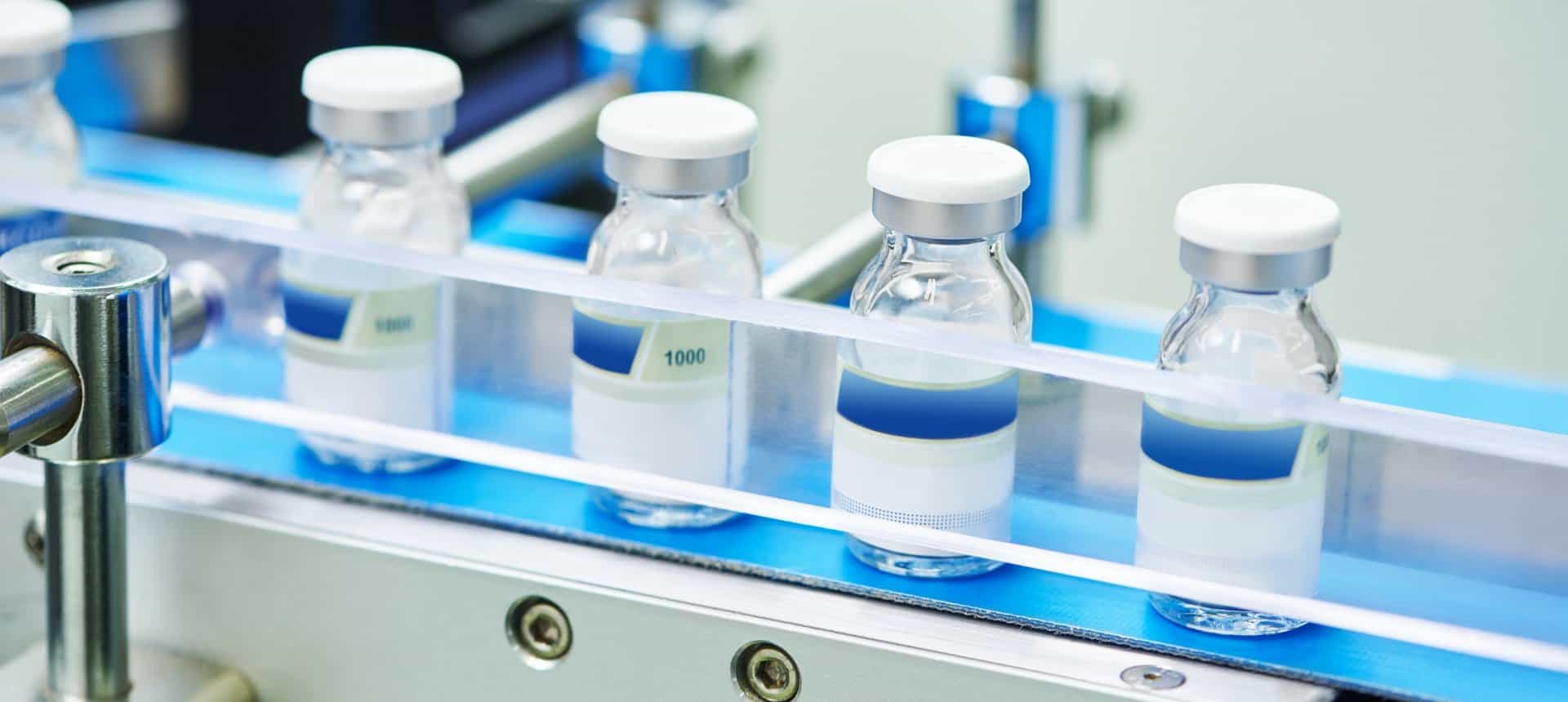
We all know glass packaging comes in different shapes, colors and formats. But when it comes to labeling, it’s easy to fall into the trap of treating all glass the same. In reality, subtle differences in texture, coatings and smoothness can radically impact how a label performs.
At AD Procerta™, we recently tested multiple real-world glass substrates — from wine bottles to pharmaceutical vials — to understand how these differences impact peel adhesion and looptack. The findings show why relying on generic datasheet values isn’t enough and how tailored testing can help packaging engineers avoid costly surprises.
The nuance of glass surfaces: A deeper dive into the data
Glass might look uniform, but it isn’t. Depending on how it’s made, shaped or treated, the surface energy and microscopic roughness of glass can vary significantly — and that has a direct effect on how well a label sticks.
To better understand these differences, we tested four representative substrates: a wine bottle, a glass jar, a pharmaceutical vial and a standard lab-grade glass panel. Each reflects a real-world application where pressure-sensitive labels need to perform reliably. We focused on two key label performance metrics:
90° peel adhesion (FTM-2): The force required to remove a label at a 90-degree angle. This shows how strong the bond becomes over time. Measurements were taken at both 20 minutes and 24 hours after application.
Looptack (FTM-9): This assesses the initial grab or "stickiness" of an adhesive upon immediate contact, crucial for high-speed labeling lines.
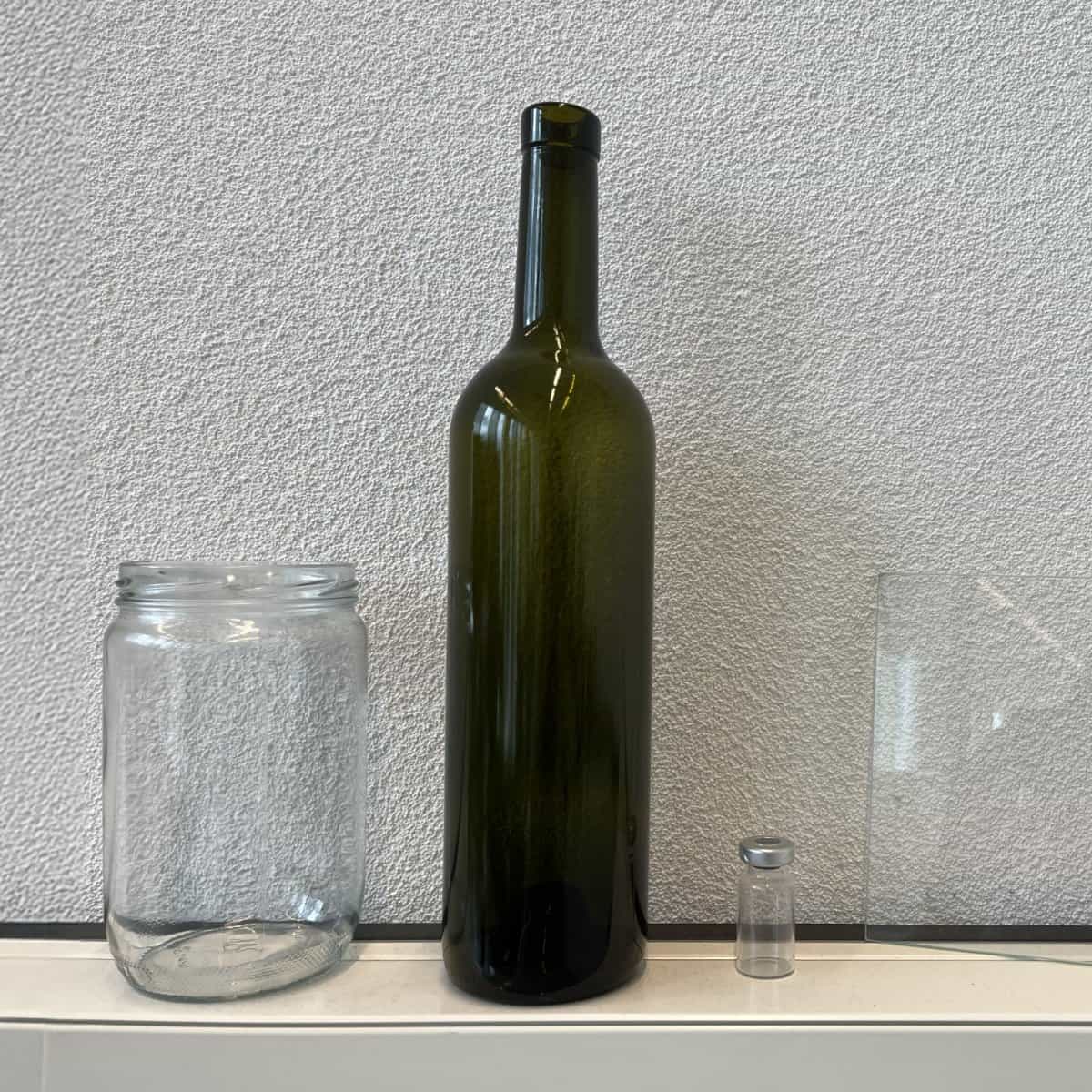
Figure 1: Various glass substrates
To keep the material variables controlled, we tested two of the most commonly used label constructions:
A 50 µm (50 gsm) clear polypropylene film paired with an emulsion adhesive
An 80 gsm machine-coated paper, also with the same emulsion adhesive
Our goal was simple: to show that not all glass performs the same and that relying on standard test panels can sometimes mask important real-world differences.
The microscopic story: Surface variances
Glass may look like glass, but there are different types, such as soda-lime glass (bottles and jars), float glass (windows and panels), borosilicate glass (common in pharma for vials, syringes, and lab equipment) and others.
Each of these types has different physical properties based on how it’s manufactured. On top of that, many are treated with coatings that further change the surface:
Bottles often carry a PE wax to improve line lubrication and prevent scuffing
Syringes typically have silicone treatments to enable a plunger to move smoothly
Float glass may show variation depending on which side was in contact with molten tin
All these treatments do have an effect on the surface and with that the tack and adhesion of a label on it.
We began the study by examining the surface of the selected glass vessels, microscopic images of the glass substrates, as shown below. These images visually confirm that the surfaces of a wine bottle, a glass jar, a glass vial and a standard glass panel vary significantly. Subtle differences in surface texture, minor imperfections and overall roughness are apparent. These microscopic variations directly influence the contact area between the adhesive and the glass, impacting the adhesive's ability to wet out and form a strong, consistent bond.
A smoother, more uniform surface, like that of a laboratory glass panel, may allow for more uniform contact and thus potentially stronger adhesion compared to a subtly textured or less uniform food/wine glass surface.
In short, the smoother the surface, the better the adhesive coverage and the stronger the potential bond.
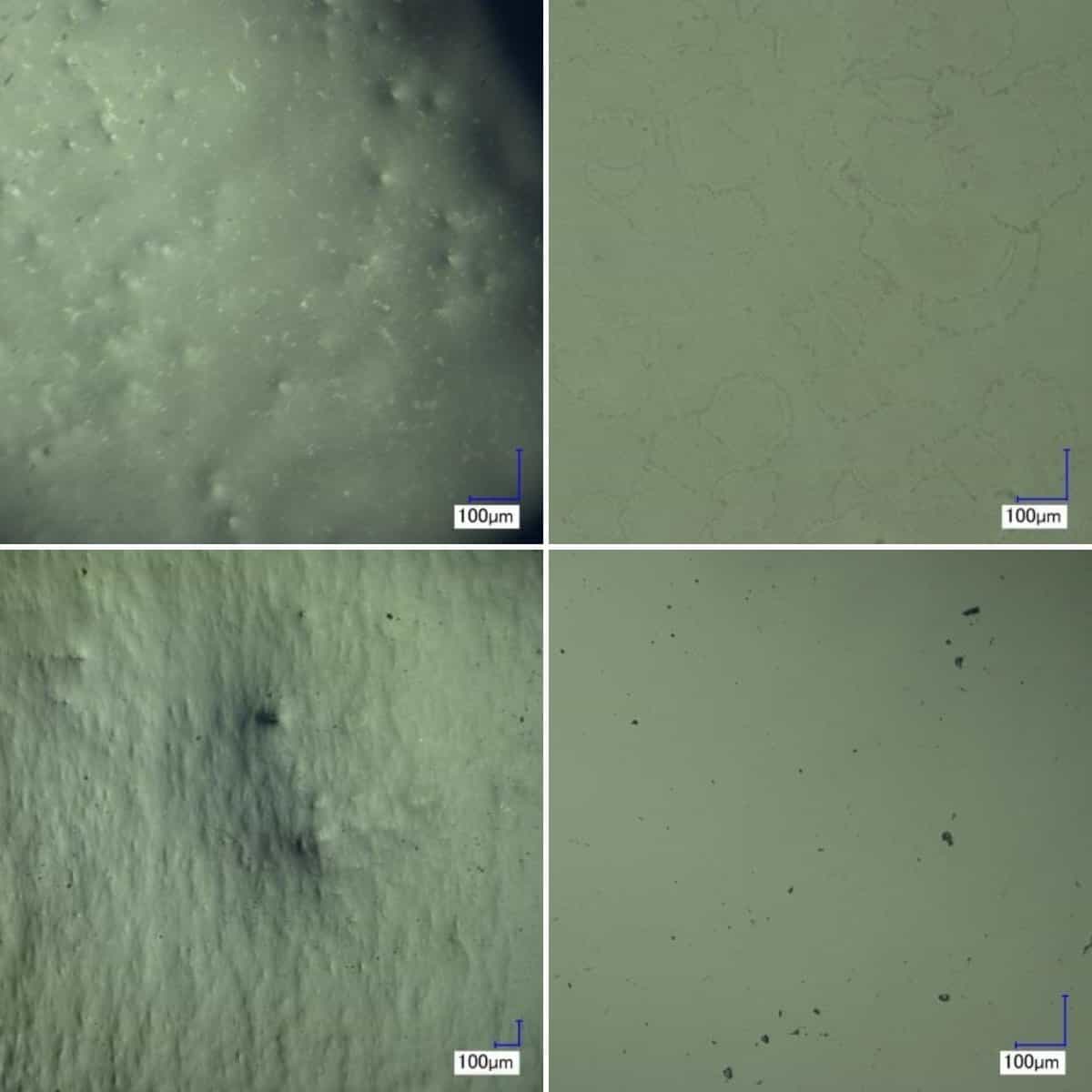
Top left: Figure 2: Microscope image of glass jar
Top right: Figure 3: Microscope image of glass panel
Bottom left: Figure 4: Microscope image of glass bottle
Bottom right: Figure 5: Microscope image of glass vial
Specific findings: Deconstructing adhesion on different glass types
Our testing confirmed clear performance differences in both peel adhesion and looptack across the various glass types.
In our testing, we found that labels perform differently across different types of glass. Long-term strength (peel adhesion) and initial stickiness (looptack) both vary significantly.
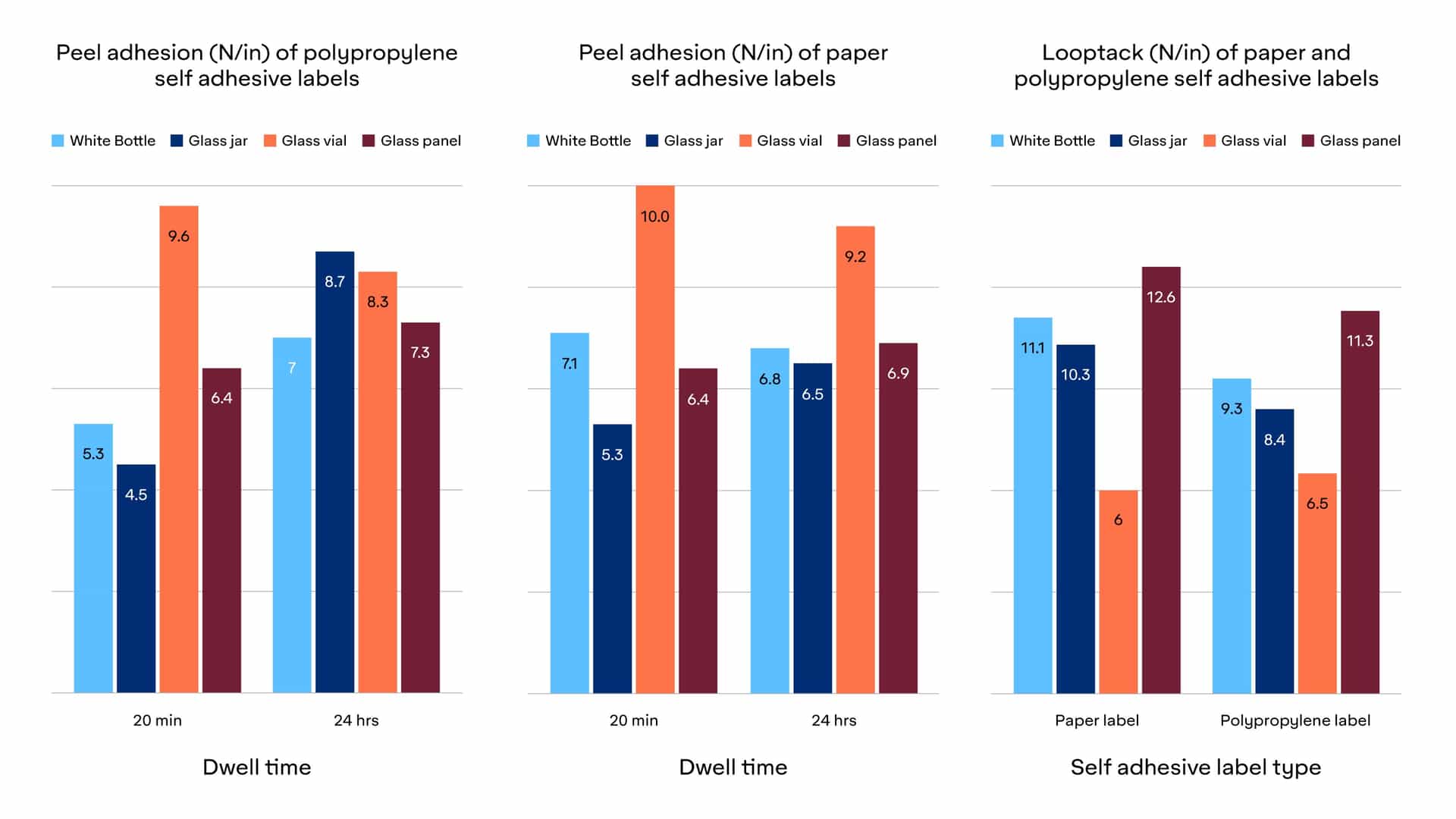
Peel Adhesion: After a full 24-hour dwell time, the final strength of the labels was generally consistent. However, the initial adhesion after just 20 minutes showed significant differences, ranging from 0.7 to 4.7 N/inch. This is a critical distinction because the 20-minute value is what is typically reported on label datasheets. If your labeled product undergoes a secondary process such as freezing, pasteurization or sanitization shortly after the label is applied, the weaker initial bond can lead to label failure. It's important to note that we occasionally observe a drop in adhesion after longer bonding periods. This can sometimes be linked to contamination on the surface, particularly in real-world packaging environments. It’s another reason why evaluating adhesion on your actual substrate is essential, since datasheet values alone don’t always reflect how a label will behave on a specific glass surface under specific conditions.
Looptack: The most dramatic differences were found in the initial 'grab' of the adhesive. We observed a large performance gap between real-world packaging and the standard test panel.
For both labels, the looptack on a glass vial was nearly half that on the standard glass panel. This lower performance on vials is often due to their smoother surfaces, which reduce contact area, as well as the specialized coatings frequently applied to pharmaceutical containers. The small, curved shape of a vial further limits the label's contact area compared to a flat test panel or large bottle.
Packaging teams using high-speed dispensing lines need this variability. A low initial tack, such as the 6 N/inch recorded on the vial, may be insufficient to ensure the label picks up and stays in place during rapid application.
Similarly, recognizing differences in adhesion among substrates can help packaging engineers better understand potential adhesion issues. And knowing these differences beforehand allows packaging engineers to select materials that prevent costly failures down the line.
The problem with generic "glass" on datasheets
Label material suppliers commonly use standardized glass panels (and occasionally stainless steel) for testing peel adhesion and looptack. While this methodology provides the advantage of a unified and consistent testing surface, it inherently offers limited insight into label performance on the diverse range of actual glass packaging substrates.
As our testing shows, the performance of a label adhesive on a wine bottle can differ significantly from its performance on a glass vial, a glass jar or a standard test panel. And those are just four types of glass substrates that we selected. In reality, glass packaging comes in many forms, each with its own surface energy, curvature and coatings. Treating “glass” as a single, generic substrate on a datasheet risks oversimplifying these nuances. It can lead packaging engineers to select materials based on incomplete information, resulting in label failures, production line inefficiencies, and ultimately compromised packaging.
What it means for packaging engineers
These findings are not merely academic; they have direct implications for packaging engineers:
Customisation matters: What works well on a glass jar might underperform on a wine bottle or a small vial. Matching label construction to the specific packaging format, use case and market is essential — especially when dealing with tight tolerances on fast production lines
Test the real thing: While datasheets are a helpful starting point, they should never replace practical testing. Lab trials using your actual packaging, under real-world environmental conditions, provide the best insight into how a label will perform. To ensure accuracy and reliability, work with a testing lab that holds ISO/IEC 17025 accreditation and specialises in self-adhesive materials.
Look beyond initial tack: Early-stage adhesion is important for application speed, but longer-term performance matters just as much. Peel adhesion over time influences label durability during transport, storage and handling — and can also affect performance in reuse or recycling. Variables like humidity, UV exposure or extreme temperatures can shift outcomes significantly depending on both label construction and glass type.
Conclusion
Glass packaging may appear consistent, but as our data shows, its surface properties can vary significantly — with real consequences for label performance. For packaging engineers, these variations make a one-size-fits-all approach risky.
Ensuring strong adhesion, aesthetic quality and production efficiency requires a closer look at the packaging in question. That means involving label suppliers early in the development process and using specialised testing that reflects real application conditions — not just generic datasheet benchmarks.
By accounting for the specific glass type, surface treatments and end-use conditions, teams can avoid the pitfalls of poor adhesion, reduce waste and ensure packaging performs as intended. Overlooking these details can lead to costly rework, supply chain delays and compromised product integrity — risks no one can afford.
About Avery Dennison
Avery Dennison Corporation (NYSE: AVY) is a global materials science company specializing in the design and manufacture of a wide variety of labeling and functional materials. The company’s products, which are used in nearly every major industry, include pressure-sensitive materials for labels and graphic applications; tapes and other bonding solutions for industrial, medical, and retail applications; tags, labels and embellishments for apparel; and radio frequency identification (RFID) solutions serving retail apparel and other markets. Headquartered in Glendale, California, the company employs more than 35,000 employees in more than 50 countries. Reported sales in 2021 were $8.4 billion. Learn more at averydennison.com.